Introduction
A slipping motorcycle clutch is a common problem, especially on manual motorcycles. This issue can reduce riding comfort and even damage the engine if ignored. A slipping clutch occurs when the clutch fails to fully transfer power from the engine to the wheels, causing weak acceleration even when the throttle is opened fully. Understanding the causes, symptoms, and solutions for a slipping motorcycle clutch is crucial for maintaining vehicle performance and riding safety.
In this article, we will explore the main factors that lead to clutch slippage, signs to watch out for, and effective repair methods. We will also provide maintenance tips to prevent similar issues in the future.
What is a Slipping Motorcycle Clutch?
The clutch is a vital motorcycle component that connects and disconnects engine power to the wheels. A slipping motorcycle clutch happens when this component does not work optimally. As a result, the engine power is not fully transmitted, and the bike feels “stuck” during acceleration. This condition is often noticeable when riding uphill or when opening the throttle fully.
A slipping clutch not only affects comfort but also fuel efficiency. If left unchecked, the clutch components can wear out quickly, resulting in higher repair costs. Therefore, recognizing the early symptoms is essential.
Causes of a Slipping Motorcycle Clutch
Worn Clutch Plates
One of the main causes of a slipping clutch is worn clutch plates. Thinned-out plates lose friction, making it difficult to transfer engine power effectively. The age of the motorcycle and frequency of use play a significant role in accelerating this wear. Riders who often carry heavy loads or perform aggressive acceleration tend to experience clutch slippage sooner.
Incorrect or Dirty Clutch Fluid
The quality and type of clutch fluid also affect clutch performance. Dirty or improper fluid can prevent the hydraulic system from operating optimally. This condition makes the clutch slippery, reducing the power transmitted from the engine. It is essential to replace clutch fluid according to the manufacturer’s recommended schedule.

Overheating from Heavy Use
Excessive riding, especially in traffic jams or on steep inclines, can cause the clutch to overheat. Overheating reduces the clutch plate’s grip temporarily, causing slippage during acceleration. Maintaining a proper riding pace and taking breaks during long rides can prevent clutch overheating.
Incorrect Riding Technique
Incorrect riding habits can also trigger clutch slippage. For example, aggressively pulling the clutch or leaving it partially engaged while climbing a hill can accelerate wear. Developing proper riding habits can prolong clutch life and prevent slippage.
Symptoms of a Slipping Motorcycle Clutch
Engine Revving but Bike Moves Slowly
The most noticeable symptom of a slipping clutch is the engine revving while the bike struggles to move. This is often felt during full acceleration or while climbing hills. If this occurs, it is important to check the clutch plates and system immediately.
Unresponsive Throttle
When the clutch slips, the throttle feels unresponsive. The bike accelerates slowly even though the engine speed increases. Riders often overlook this symptom, but it can cause serious damage if ignored.
Burning Smell
A slipping clutch often produces a distinct burnt smell. This odor comes from the clutch plates overheating due to constant friction. If you notice this smell, stop the bike and inspect the clutch to prevent further damage.
Solutions for Slipping Motorcycle Clutch
Replacing Worn Clutch Plates
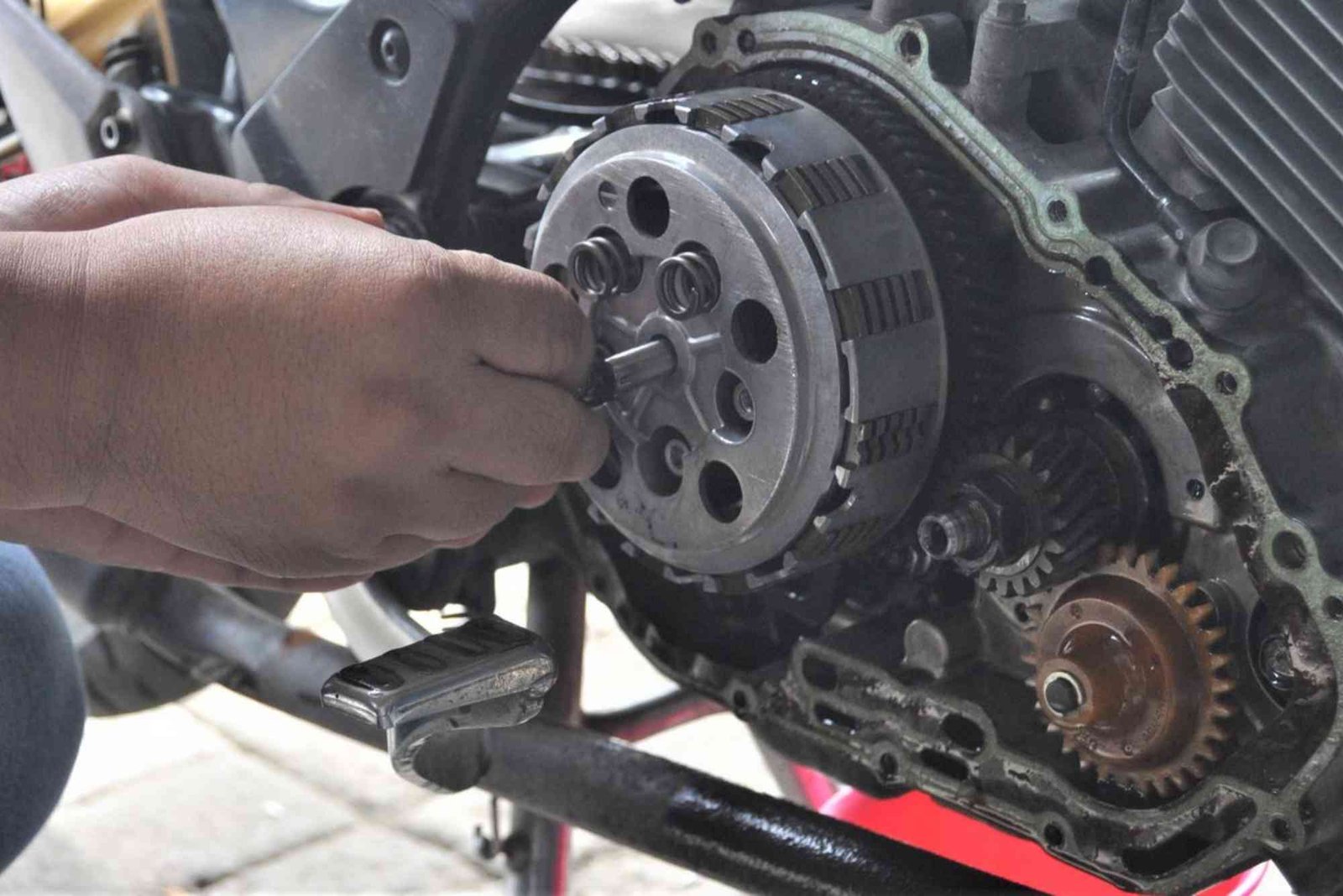
The most effective solution for a slipping clutch is replacing worn clutch plates. Using original or high-quality plates ensures the motorcycle regains optimal performance. This replacement should be done by an experienced mechanic to ensure proper installation.
Replacing Clutch Fluid
If the issue originates from the hydraulic system, replacing the clutch fluid with the correct type can restore performance. Ensure there is no air trapped in the system to maintain stable pressure.
Repairing the Clutch System
Sometimes slippage occurs due to weak clutch springs or worn clutch discs. A thorough inspection of all clutch components is recommended to ensure no parts are damaged. Additional replacements may be necessary to restore normal clutch function.
Correcting Riding Technique
Apart from physical repairs, riders should also improve their riding habits. Avoid pulling the clutch aggressively, do not leave it partially engaged while climbing, and use the correct gear for the road conditions. Proper riding techniques can extend clutch life and reduce slippage risk.
How to Prevent a Slipping Motorcycle Clutch
Regular maintenance is key to preventing clutch slippage. Always ensure the clutch plates are in good condition, replace the clutch fluid on schedule, and avoid habits that put excessive strain on the clutch. It is also recommended to inspect the clutch system during routine servicing. By taking these preventive measures, your motorcycle will remain comfortable to ride, and the clutch will last longer.
A slipping motorcycle clutch can become a serious problem if left untreated. Causes range from worn clutch plates, improper clutch fluid, overheating, to incorrect riding habits. Symptoms such as slow acceleration, revving engine, and a burnt smell should be addressed immediately. Effective solutions include replacing the clutch plates, repairing the clutch system, changing the fluid, and improving riding technique.
Regular maintenance and early detection of clutch slippage can extend the motorcycle’s lifespan and ensure a smooth riding experience. Do not wait for the problem to worsen—inspect and repair your clutch promptly for maximum performance.
FAQ (Frequently Asked Questions)
What is the main cause of a slipping motorcycle clutch?
Clutch slippage is usually caused by worn clutch plates, dirty or improper clutch fluid, or excessive use of the motorcycle.
How can I tell if my motorcycle clutch is slipping?
Common signs include the engine revving while the bike moves slowly, unresponsive throttle, and a burnt smell from the clutch.
Can I fix a slipping clutch myself?
Simple maintenance, such as changing the clutch fluid, can be done at home. However, replacing clutch plates or repairing the system should be done by an experienced mechanic.
How long do motorcycle clutch plates last?
Clutch plate life varies depending on usage, usually between 20,000–40,000 km. Regular maintenance can extend their lifespan.
How can I prevent clutch slippage?
Regular maintenance, timely fluid replacement, avoiding aggressive clutch use, and proper riding techniques can prevent slippage.
Car Road Trip Tips: Automotive Checklist for Long Journeys Before starting a long road trip, make sure your car is in top condition. Check the oil, brakes, tires, and lights. Bring emergency tools like a jack, jumper cables, and first aid kit. Don’t forget a map or GPS, water, and snacks. With this preparation, long trips become safe and comfortable.